Toddler Nightmares: Comfort and Bedtime Tips for Parents
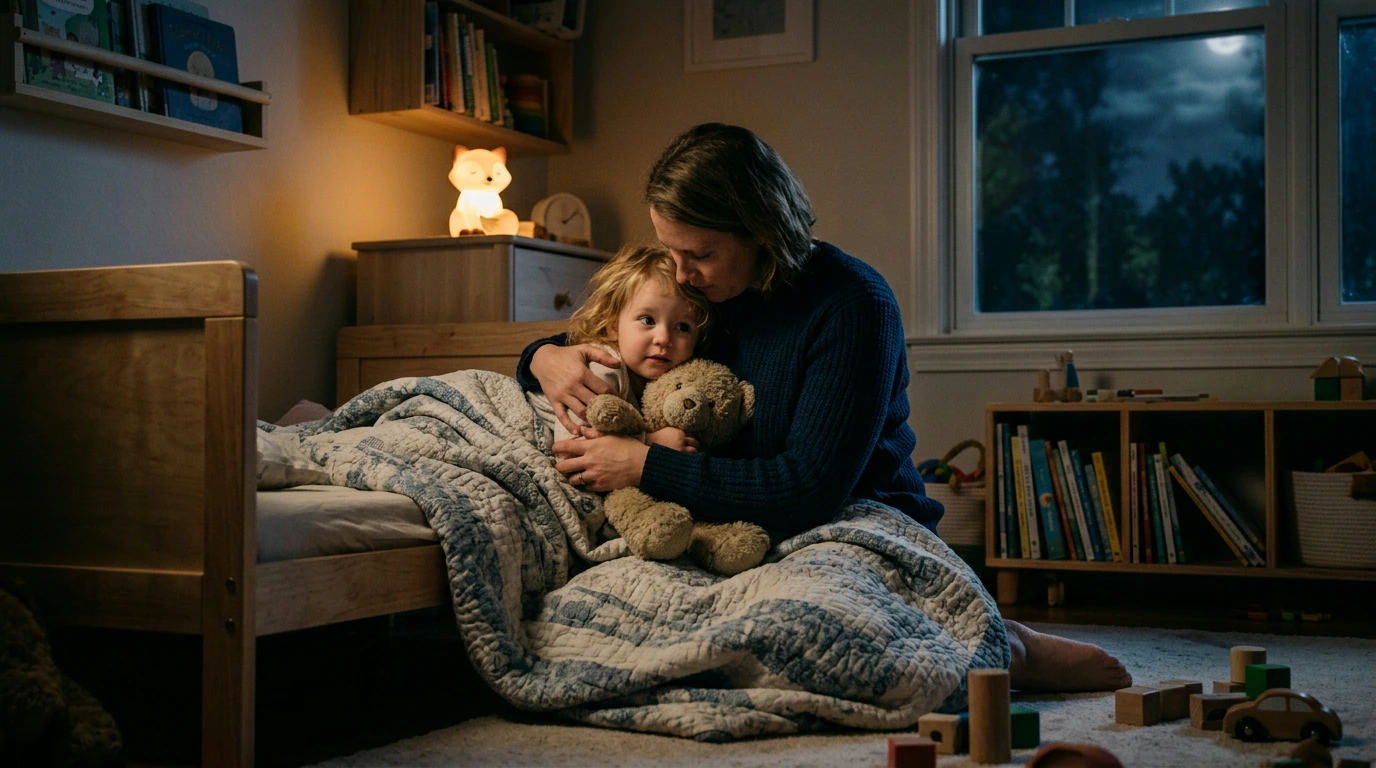
A nightmare can turn a peaceful night into an unsettling one for both you and your toddler. In the moment, your calm presence can help your child feel safe again. Over time, a predictable bedtime routine can make settling down feel more comfortable, even though it cannot prevent every bad dream.
Our team offers an ebook for parents who want practical ideas for comforting a toddler and navigating bedtime challenges. You can use these suggestions alongside your own knowledge of your child and your pediatrician’s guidance when needed.
Start With Comfort After a Nightmare
When your toddler wakes frightened, approach calmly and let them know you are there. You might say, “That was scary, but you are safe now.” Offer a cuddle or sit nearby if your child welcomes it. A familiar stuffed animal or blanket may also help them settle.
Try to listen without dismissing the fear. Your toddler does not need to explain the dream before receiving comfort, and it is fine if they cannot find the words. If they want to talk, keep your response simple and reassuring rather than asking lots of questions.
Keep the room dim and your voice quiet as you help your child return to sleep. If a small night-light makes them feel more comfortable, consider using one. Once they are calmer, remind them that it is time to rest and stay nearby for a few minutes if that helps.
Build a Bedtime Routine That Feels Safe
A familiar sequence can make bedtime easier to anticipate. Aim for reasonably consistent bedtimes and wake-up times, and leave enough room in the evening for a gradual wind-down. Your routine does not have to be elaborate: washing up, putting on pajamas, reading a gentle story, and singing a quiet song can be enough.
Choose activities that suit your child. One toddler may enjoy talking about the day, while another prefers a short book and a cuddle. Consider limiting frightening stories and screen content before bed, especially if you notice that certain images or characters worry your child.
If your toddler wants to talk about a dream the next day, invite them to describe it or draw a picture. Follow their lead rather than insisting. Daytime gives you a chance to acknowledge their feelings without turning bedtime into a long discussion about fears.
Simple Ways to Support a Calmer Bedtime
| When | What to try | Why it may help |
|---|---|---|
| Before bed | Follow a familiar sequence of quiet activities | Creates a predictable transition to sleep |
| After a nightmare | Offer calm reassurance and comfort | Helps your child feel safe |
| The next day | Invite your child to talk or draw about the dream if they wish | Provides a gentle way to express feelings |
Give changes a little time, and adjust when something does not work for your family. A routine should feel reassuring, not like another test you have to pass.
Nightmares and Night Terrors: What Parents May Notice
A toddler who has a nightmare often wakes up and seeks comfort. They may remember a frightening dream, although a young child might only be able to say that they feel scared.
A night terror can look different. Your child may appear distressed, cry, or move around while not being fully awake. They may not respond to reassurance in the usual way and may not remember the event afterward.
If you suspect a night terror, focus on keeping your child safe rather than trying to wake them. Stay nearby, move hazards out of the way, and allow the episode to pass. If you are unsure what you are seeing or have concerns, talk with your pediatrician. The American Academy of Pediatrics’ HealthyChildren.org and the NHS guide to night terrors and nightmares offer further information.
When to Ask Your Child’s Pediatrician for Help
Ask your pediatrician for advice if nightmares happen often, cause significant distress, or disrupt your child’s sleep or daytime activities. You can also reach out whenever you feel concerned, even if you are not sure whether the experience is a nightmare or a night terror.
It may help to note when the episodes happen, what you observe, and how your child seems the next day. Mention recent stressful experiences and any other sleep concerns so the clinician can consider what support is appropriate. General parenting resources can complement that conversation, but they do not replace individualized medical advice.
Explore Our Toddler Nightmares Ebook
Our What to Do When Your Toddler Has Nightmares ebook is a guide for parents looking for practical comforting tips and bedtime solutions. It is listed in stock for $76.99 USD. Consider it as a resource alongside a calm routine and, when needed, guidance from your child’s pediatrician.
If you are also working on a household budget, our in-stock Personal Finance Made Easy ebook covers budgeting, saving, investing, and debt management. It is a separate resource, so you can decide whether it fits your family’s priorities.
FAQ
What should I say when my toddler wakes from a nightmare?
Try saying, “That was scary, but you are safe now.” Offer comfort and let your child decide whether they want to talk about the dream.
How can I help prevent nightmares?
Nightmares cannot always be prevented, but a consistent, calming bedtime routine may help. Consider avoiding frightening stories and screen content before bed.
When should I talk to a pediatrician about nightmares?
Ask for advice if nightmares are frequent, distressing, or interfere with sleep or daytime life. You can also contact your pediatrician whenever you are concerned.












Leave a comment